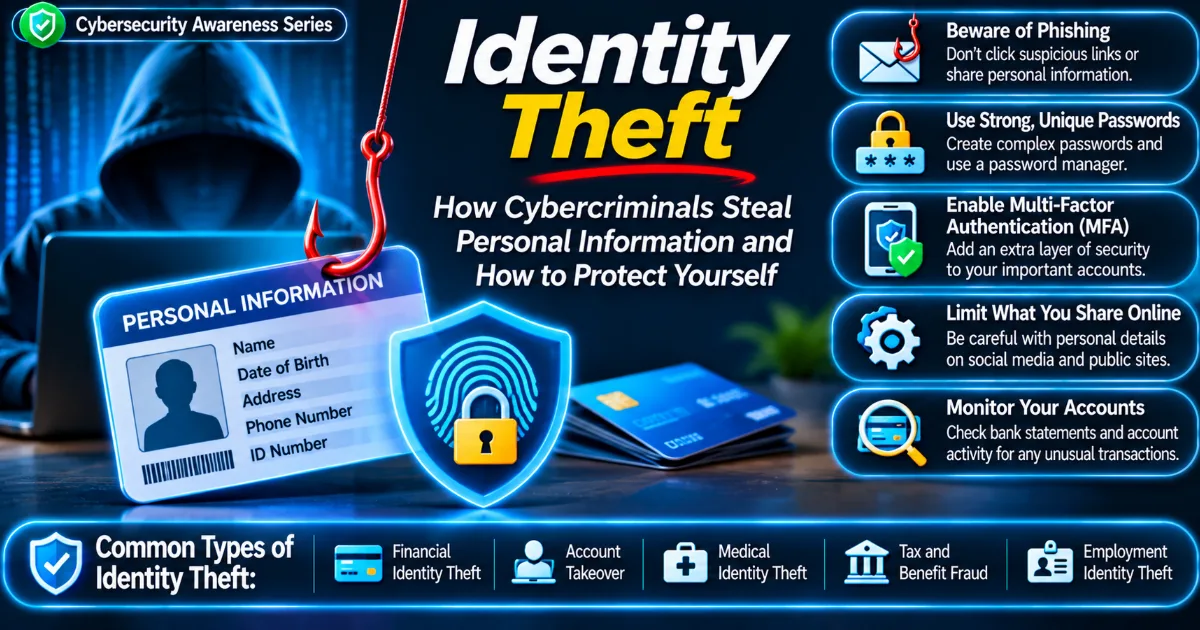
Identity theft occurs when someone uses another person's personal information without permission, often to commit fraud, access accounts, obtain financial benefits, or impersonate the victim. It can affect anyone who uses digital services, shares information online, shops on the internet, or communicates through email and messaging platforms. Criminals may steal names, addresses, phone numbers, identification details, financial information, passwords, photographs, or other data that can help them pretend to be someone else.
The consequences can extend far beyond an unfamiliar transaction or an unexpected login notification. A stolen identity may be used to open fraudulent accounts, apply for financial products, take over existing online accounts, make unauthorized purchases, obtain services, or deceive friends and family. Victims may spend considerable time contacting institutions, proving their identity, securing accounts, disputing transactions, and correcting inaccurate records.
Digital technology has made everyday activities more convenient, but it has also created more places where personal information is collected, stored, transmitted, and shared. Online shopping platforms, banking applications, social networks, employment websites, government portals, cloud services, and mobile devices all contain information that criminals may try to obtain.
Identity theft is not always the result of a sophisticated technical attack. Sometimes it begins with a fake phone call, a deceptive email, a malicious application, an exposed document, an insecure password, or information that someone has shared publicly. Understanding these methods is an important step towards preventing identity theft.
This article explains how identity theft works, the information criminals target, common warning signs, and practical measures individuals can use to protect their digital and financial identities.
Continue Reading
What Is Identity Theft?
Identity theft is the unauthorized use of another person's identifying information. The criminal uses that information to pretend to be the victim or to gain access to something that should belong only to the legitimate individual.
The stolen information may include a person's full name, date of birth, residential address, phone number, email address, government identification details, bank account information, payment card details, login credentials, or biometric information.
Identity theft can occur in physical and digital environments. A stolen wallet containing identity documents can be used for impersonation. A compromised email account can expose password reset messages and private correspondence. A fraudulent website can collect personal information from people who believe they are completing a legitimate application.
It is important to distinguish identity theft from identity fraud. Identity theft describes the unauthorized acquisition or use of personal identifying information, while identity fraud generally refers to fraudulent activities carried out using that information. In practice, the terms are closely connected and are often used together.
Identity theft can also involve partial information. A criminal may not need a complete identity profile to begin an attack. A name and phone number might be enough to make a convincing impersonation call, while an email address and reused password may provide access to an online account.
Why Personal Information Is Valuable to Cybercriminals
Personal information has value because it can be used to access services, impersonate individuals, influence victims, or support additional attacks.
A full name and date of birth may help a criminal make an identity verification attempt more convincing. A phone number can be used for fraudulent messages, impersonation calls, or attempts to take control of an account. Email access may allow password resets across multiple services. Financial information may enable unauthorized purchases or account misuse.
Information can also be combined. A criminal who knows someone's workplace, city, family relationships, and recent activities may be able to create a highly believable message. For example, an attacker might pretend to be a colleague who knows the victim's job title and asks for a document through a fraudulent link.
This is one reason seemingly harmless information should be shared carefully. The risk often comes from the combination of details rather than from a single piece of information.
Personal data may also be exposed through third-party data breaches. A person can follow good security practices and still be affected when an organization holding their information suffers a security incident. Good personal security cannot prevent every breach, but it can reduce the damage that follows.
Common Types of Identity Theft
Financial Identity Theft
Financial identity theft occurs when criminals use another person's information to access money, make unauthorized transactions, or obtain financial products fraudulently.
This may involve stolen payment card details, unauthorized bank account access, fraudulent loan applications, or misuse of digital payment services. Criminals may also attempt to change account contact details so that alerts and verification messages no longer reach the legitimate account holder.
Unexpected transactions, unfamiliar payment notifications, unexplained account changes, and financial messages about applications the person did not submit can be warning signs.
Financial identity theft requires prompt action. Contact the relevant bank or payment provider through an official channel, report suspicious activity, and follow its instructions for securing the account.
Account Takeover
Account takeover occurs when a criminal gains control of an existing online account. The account may belong to an email service, social network, shopping platform, cloud storage provider, or financial service.
Attackers may use stolen passwords, phishing pages, malware, compromised devices, or password reuse to gain access. Once inside, they may change recovery information, read private messages, make purchases, or use the account to deceive other people.
Email account takeover is especially serious because email is frequently used to reset passwords and confirm account changes. Protecting the primary email account should therefore be a priority.
Synthetic Identity Fraud
Synthetic identity fraud involves combining real and fabricated information to create an identity that does not correspond to one genuine person. Criminals may use some legitimate identifying details alongside invented information to create a profile for fraudulent purposes.
This type of fraud can be difficult to recognize because the resulting identity may not immediately match a complete record belonging to a real individual. It may be used to apply for services, establish accounts, or conduct financial fraud.
Individuals should protect personal identifiers and pay attention to unexpected correspondence, account notifications, or financial records that suggest their information may have been used without permission.
Medical Identity Theft
Medical identity theft occurs when someone uses another person's identity or health-related information to obtain medical services, products, or benefits fraudulently.
This can create privacy concerns and potentially lead to inaccurate records. For example, information may be added to a medical record under the wrong identity, creating confusion when the legitimate person later seeks care.
People should protect medical documents, insurance information, identity details, and account credentials associated with healthcare services. Unexpected bills or unfamiliar medical records should be investigated through the relevant provider.
Tax and Government Benefit Identity Theft
Criminals may attempt to use personal information to submit fraudulent tax-related claims, access government services, or apply for benefits in someone else's name.
The exact methods and reporting procedures vary by country. Individuals should use official government portals, protect identity documents, and be cautious of messages claiming that a tax refund, government benefit, or identity verification process requires immediate payment or disclosure of sensitive information.
Unexpected notices about applications or claims that a person did not submit should be taken seriously and verified directly with the relevant authority.
Employment and Professional Identity Theft
Employment-related identity theft may involve the unauthorized use of personal information to apply for jobs, obtain work-related benefits, or impersonate another individual in a professional setting.
Fake recruiters and fraudulent job portals can also collect identity documents under the pretext of processing an application. Job seekers may be asked to submit identification details, bank information, or other sensitive documents before they have verified the employer.
Verify the organization and the recruiter independently before sharing sensitive information. A genuine-looking job advertisement or professional profile does not prove that the opportunity is legitimate.
How Cybercriminals Steal Personal Information
Phishing Emails and Messages
Phishing is one of the most common methods used to collect personal information. Attackers send messages that appear to come from trusted organizations, such as banks, delivery companies, employers, government departments, or online platforms.
The message may claim that an account has been suspended, a payment has failed, a parcel is waiting, or an identity document needs to be verified. It usually directs the recipient to a website designed to collect login credentials or personal details.
Some phishing messages contain malicious attachments or links that lead to harmful downloads. Others simply ask the victim to reply with sensitive information.
Check the sender carefully, avoid unexpected links, and access important services through their official applications or websites. Never share passwords or one-time verification codes in response to unsolicited requests.
Social Engineering and Impersonation Calls
Social engineering relies on manipulating people rather than directly breaking into a technical system. Criminals may pretend to be bank employees, government officials, technical support agents, delivery representatives, or people known to the victim.
They may use urgency, fear, authority, or reassurance to persuade someone to reveal confidential information. A caller might claim that a bank account is at risk and ask the victim to disclose a verification code to stop a fraudulent transaction.
Caller identification can be misleading, and a familiar name or displayed phone number does not guarantee that the caller is genuine.
If a caller requests a password, PIN, one-time code, remote access, or an unusual payment, stop the conversation and contact the organization through a verified channel. Do not rely on a phone number provided by the caller.
Data Breaches
A data breach occurs when information held by an organization is accessed, disclosed, altered, or stolen without authorization. Breaches may expose customer names, email addresses, passwords, contact details, financial information, or other records.
Individuals cannot control the security practices of every organization that holds their information. However, they can reduce the impact of a breach by using unique passwords, enabling multi-factor authentication, and monitoring important accounts.
If an organization informs you that your information may have been exposed, read its official guidance carefully. Change affected passwords if necessary, particularly if the same password was used elsewhere. Be alert for phishing messages that exploit the breach by pretending to offer support.
Malware and Malicious Applications
Malware is software designed to perform harmful or unauthorized activities. It may steal credentials, collect personal information, monitor activity, or provide an attacker with access to a device.
Malicious applications may imitate legitimate tools or appear as games, document readers, financial services, or utility software. Some request unnecessary permissions that allow them to access information unrelated to their stated purpose.
Download applications from trusted sources, review the developer, check permissions, and keep the operating system updated. Avoid installing unknown files received through messages or unfamiliar websites.
Public Wi-Fi and Unsafe Networks
Public wireless networks can create additional risks, especially when users connect to networks they cannot verify. Attackers may create deceptive network names or attempt to intercept poorly protected communications.
Use trusted networks where possible. Confirm the network name with the venue, avoid suspicious connection prompts, and ensure websites use secure HTTPS connections. A reputable VPN may provide additional protection on untrusted networks, but it cannot prevent phishing or make a malicious website safe.
Avoid conducting sensitive transactions on unfamiliar devices or networks when a safer connection is available.
Physical Document Theft
Identity theft is not limited to the internet. Physical documents can contain information that criminals use to impersonate someone.
Lost wallets, stolen mail, discarded documents, unattended identification cards, and improperly disposed financial statements may expose personal details.
Keep important documents secure, avoid leaving identity papers unattended, and destroy unnecessary documents containing sensitive information before disposal. Do not carry more identification or financial cards than necessary.
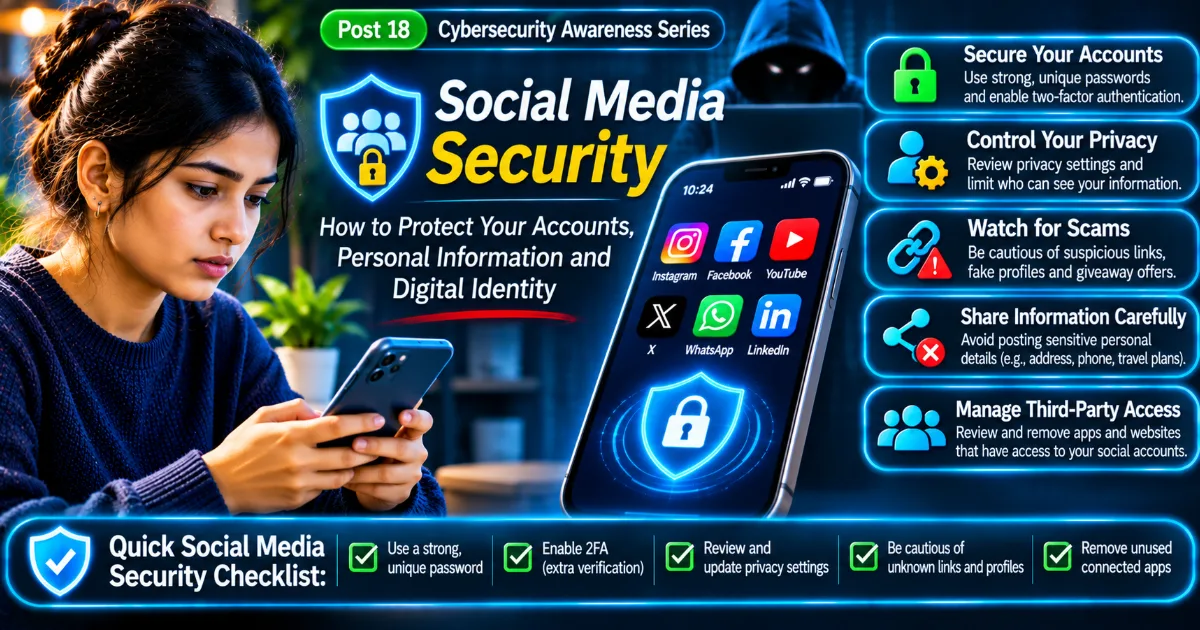
Social Media Oversharing
Public profiles can reveal details that help criminals create targeted scams. Birthdays, family relationships, workplaces, travel plans, contact details, and photographs may provide useful information.
Review public profile information and limit access to sensitive details. Avoid sharing photographs of identity documents, boarding passes, financial records, or other material containing readable personal information.
Remember that even private posts can be copied or shared by recipients. Consider the possible consequences before publishing personal information.
Warning Signs That Your Identity May Have Been Stolen
Identity theft is not always immediately obvious. Criminals may use stolen information quietly before the victim notices a problem. Recognizing unusual activity early can help reduce the damage.
One warning sign is receiving notifications about account logins, password changes, or verification requests that you did not initiate. These may indicate that someone is attempting to access an account.
Unexpected financial transactions, unfamiliar payment confirmations, or messages about applications you never submitted also deserve attention. Do not ignore letters, emails, or account alerts relating to financial products or services you do not recognize.
Other possible warning signs include being unable to sign in because account details have changed, receiving password reset messages repeatedly, or discovering unfamiliar devices in an account's active session list.
You may also receive messages from friends saying that your account has sent suspicious links or requests for money. This can indicate that an account has been compromised.
A single unusual event does not always prove identity theft. Technical errors, delayed notifications, and legitimate account activity can sometimes appear unfamiliar. However, unexplained activity should be verified through official channels rather than dismissed.
How to Protect Yourself From Identity Theft
Use Strong and Unique Passwords
Create a different password for every important online account. Reusing passwords increases risk because a breach on one service may allow criminals to attempt access to other services.
Use long, unpredictable passwords rather than names, birthdays, phone numbers, or common phrases. A reputable password manager can generate and store unique passwords securely.
Protect the password manager with a strong primary password and multi-factor authentication where supported. Never share passwords through ordinary messages or store them in publicly accessible documents.
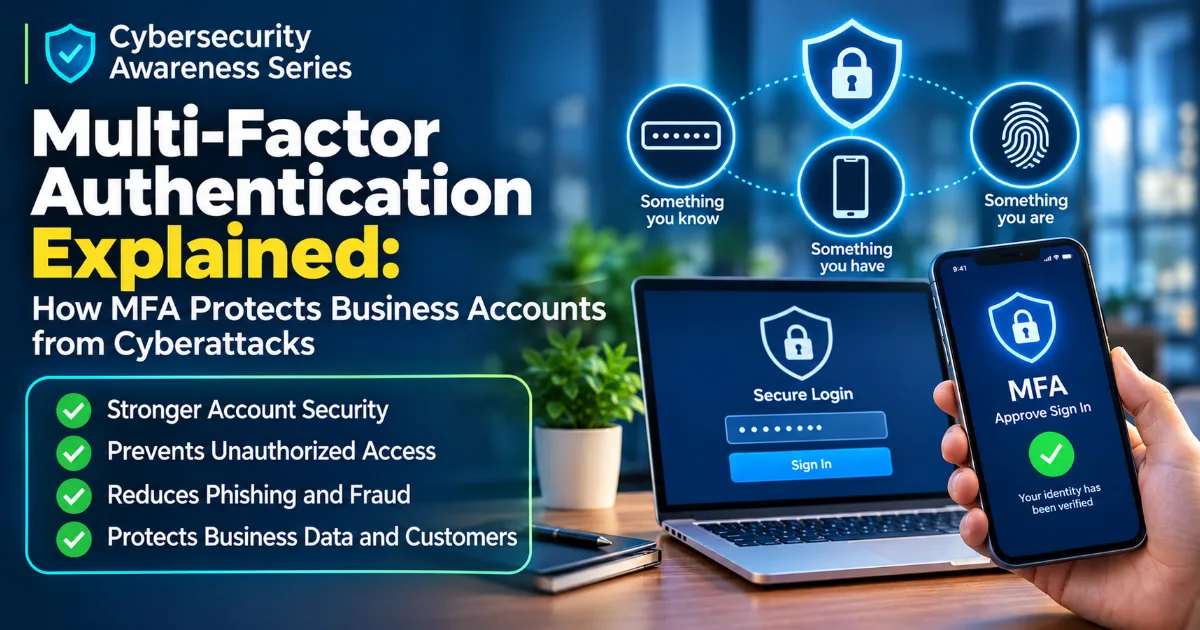
Enable Multi-Factor Authentication
Multi-factor authentication adds an extra verification step when someone signs in. Depending on the service, this may involve an authenticator application, passkey, hardware security key, or another supported method.
Enable it on email, banking, cloud storage, social media, shopping, and other important accounts. Prioritize accounts that can be used to reset access to other services.
Never approve a login request that you did not initiate. Treat verification codes as confidential. A person who obtains a password and a verification code may be able to bypass protections that would otherwise prevent account access.
Protect Your Email Account
Your primary email account is often the foundation of your digital identity. It may receive password reset links, account alerts, purchase confirmations, and sensitive correspondence.
Use a unique password and multi-factor authentication. Review recovery phone numbers, backup email addresses, active sessions, and connected applications.
If your email account is compromised, an attacker may use it to reset other passwords. Secure it promptly if you notice unfamiliar activity.
Limit the Personal Information You Share
Share only the personal information needed for a particular purpose. Avoid publishing your full date of birth, home address, personal identification numbers, financial details, or travel plans publicly.
When a website requests personal information, consider whether the request is necessary. Check the organization's identity and use its official website or application.
Do not send identity documents through an unverified email address or messaging account. If a document must be submitted, use the organization's established secure process.
Verify Websites and Online Services
Before entering sensitive information, check that the website address is correct. Look for misspellings, unusual domain names, misleading subdomains, and unexpected redirects.
A padlock symbol and HTTPS connection indicate that the connection is encrypted, but they do not prove that the website itself is legitimate. Fraudulent websites can also use HTTPS.
For banking, government, employment, and financial services, access the service through a known official address or trusted application rather than a link in an unexpected message.
Keep Devices and Applications Updated
Security updates fix vulnerabilities that criminals may exploit. Install operating system and application updates promptly, especially for browsers, email applications, financial tools, and messaging services.
Remove applications that are no longer needed. Review permissions and avoid installing software from unknown sources.
Use a screen lock on smartphones and tablets. Enable device-finding and remote-locking features where available, and maintain secure backups of important information.
Protect Financial and Identity Documents
Store identity documents, payment cards, tax records, and financial statements securely. Avoid photographing or uploading these documents to untrusted services.
When sharing a document for a legitimate purpose, use the organization's verified submission process. Where accepted, consider whether unnecessary information can be obscured without affecting the document's validity.
Do not leave sensitive documents unattended in public places, vehicles, or shared workspaces.
Monitor Financial and Online Accounts
Review bank statements, payment activity, credit-related information where available, and account security notifications regularly.
Turn on transaction alerts where offered. Investigate unfamiliar charges, new account notifications, changes to contact details, or unexpected authentication requests.
Regular monitoring can help identify problems earlier. It does not prevent every form of identity theft, but it can reduce the time between an incident and discovery.
What to Do If You Become a Victim of Identity Theft
If you suspect that your identity has been stolen, act promptly and keep a clear record of what happened. The appropriate process depends on the type of information exposed and the country where you live.
First, secure the affected accounts. Change compromised passwords from a trusted device, enable multi-factor authentication, review active sessions, and remove unfamiliar recovery methods or connected applications.
Second, contact the relevant financial institution if bank accounts, cards, loans, or payment services may be affected. Use official contact details and request guidance on blocking transactions, securing access, disputing unauthorized activity, or replacing affected cards.
Third, report the incident to the relevant service provider or organization whose information or account has been misused. Ask what evidence is required and whether the organization can restrict or investigate fraudulent activity.
Fourth, preserve evidence. Keep copies of suspicious messages, transaction records, emails, account notifications, reference numbers, and relevant correspondence. Avoid deleting material that may help an investigation.
Fifth, report the incident to the appropriate government or law-enforcement authority. In India, individuals can use official cybercrime reporting channels and contact the appropriate authorities for assistance. For financial cyber fraud, prompt reporting through the designated official channels is important. Always verify reporting instructions through government sources.
Finally, continue monitoring accounts and correspondence. Identity misuse may involve more than one service, especially if the same personal information or password has been exposed.
Do not pay unofficial individuals who promise guaranteed identity recovery or claim they can erase all records of fraud. Such offers may be additional scams.
Identity Theft Prevention for Businesses
Businesses also hold personal information belonging to employees, customers, suppliers, and partners. A security incident involving this information can create financial, legal, operational, and reputational consequences.
Organizations should collect only the personal information required for legitimate business purposes and restrict access according to job responsibilities. Sensitive records should be protected through appropriate access controls, encryption, secure storage, and retention policies.
Employees should receive training on phishing, social engineering, document handling, password security, and incident reporting. Organizations should also establish clear procedures for responding to suspected identity theft and data exposure.
Business accounts should use multi-factor authentication, strong access controls, and monitoring for unusual activity. When employees or contractors leave an organization, their access should be removed promptly.
Businesses should review third-party providers that process personal information and understand how those providers protect and manage the data. Security is not limited to the organization's own systems. Information shared with external services also requires appropriate safeguards.
Building Long-Term Awareness About Identity Protection
Identity protection is not a one-time activity. Personal information is shared with new services, devices are replaced, applications request permissions, and online threats continue to change.
Develop a regular routine for reviewing account security, checking privacy settings, updating devices, and monitoring financial activity. Use a password manager, enable multi-factor authentication, and keep secure backups.
Teach family members to recognize suspicious calls, fake websites, fraudulent job offers, and requests for verification codes. Children and older adults may need additional guidance because criminals sometimes target people who are less familiar with particular online scams.
Be especially cautious when a message creates pressure to act immediately. Legitimate organizations may send security notifications, but users should verify unexpected requests independently rather than following links or instructions without checking.
The goal is not to avoid digital services. It is to use them with a clear understanding of what information is being shared, who receives it, and how access is protected.
Conclusion
Identity theft is a serious cybersecurity and privacy concern because personal information can be used to access accounts, commit financial fraud, impersonate individuals, and create long-lasting problems for victims. Criminals may obtain information through phishing, social engineering, data breaches, malicious applications, insecure networks, physical document theft, or public information shared online.
Protecting yourself requires a combination of technical safeguards and careful everyday decisions. Use unique passwords, enable multi-factor authentication, secure your email account, review financial activity, protect identity documents, and verify websites before sharing sensitive information.
If you notice unexpected account activity, unfamiliar financial transactions, or suspicious identity-related correspondence, investigate promptly through official channels. Preserve evidence and contact the relevant institutions and authorities when necessary.
Your identity is one of your most valuable personal assets. Treat personal information with care, share it only when necessary, and make account security a regular habit. A thoughtful approach to digital privacy can significantly reduce the opportunities available to identity thieves and help protect your financial, personal, and professional life.
#IdentityTheft #CybersecurityAwareness #DataPrivacy #OnlineSafety #PersonalInformationProtection