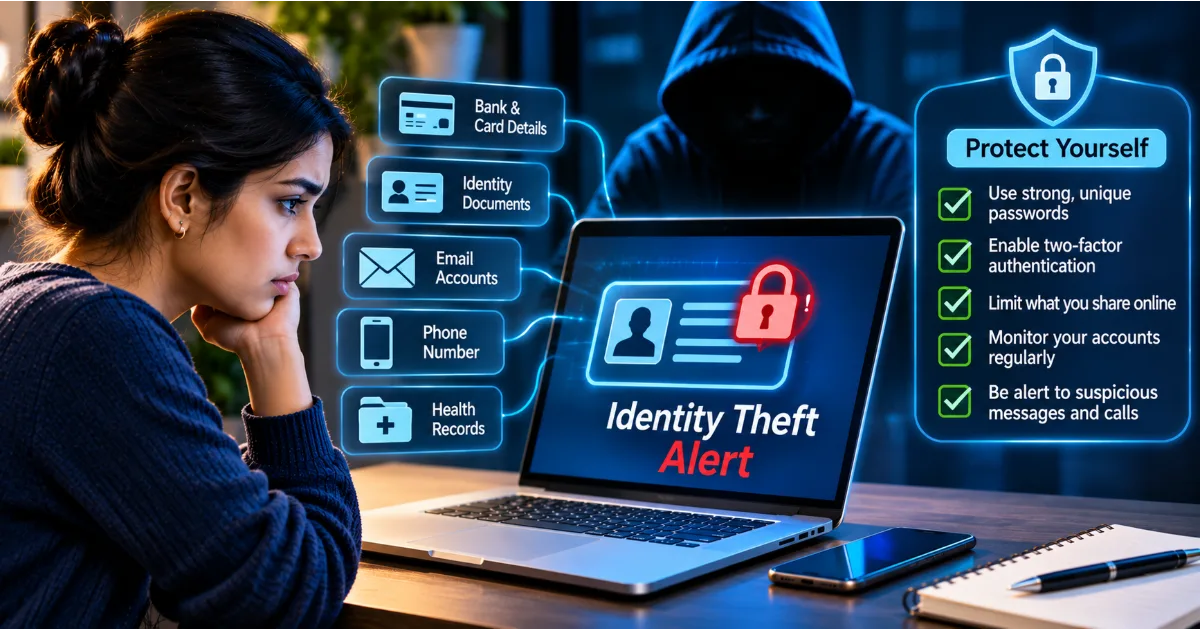
Our personal information has become one of the most valuable assets in the digital world. Every day, people use the internet to access banking services, make payments, communicate with friends, apply for jobs, shop online, manage healthcare records, and interact with government platforms. These activities make everyday life more convenient, but they also create opportunities for cybercriminals to collect, misuse, and exploit personal information.
Online identity theft occurs when someone obtains and uses another person's personal information without permission, usually to commit fraud or gain an unauthorised advantage. A criminal might use stolen information to open a financial account, access an existing bank account, apply for a loan, take control of an email address, impersonate someone on social media, or conduct fraudulent transactions. In some cases, victims may not realise their identities have been compromised until they receive an unexpected financial notice, discover unfamiliar activity, or find that someone has been communicating with others in their name.
Identity theft is not limited to people who share sensitive information carelessly. Even individuals who follow basic online safety practices can become victims when a company experiences a data breach, a fraudulent website captures their information, or a criminal manipulates someone into revealing confidential details. The important lesson is that protecting your identity requires more than avoiding suspicious links. It requires understanding what information is valuable, how criminals obtain it, and how to respond when something goes wrong.
What Is Online Identity Theft?
Online identity theft is the unauthorised collection, use, or misuse of another person's identifying information through digital channels. This information can include a person's full name, date of birth, residential address, phone number, email address, government identification details, financial information, account credentials, photographs, or other personal records.
Continue Reading
Criminals use stolen information for different purposes. Some want immediate financial gain, while others collect personal data and sell it to other criminals. A stolen email account, for example, may provide access to password-reset messages, private conversations, saved documents, and information about other services used by the victim. This can turn one compromised account into a gateway to several additional accounts.
Identity theft can also involve impersonation without direct financial transactions. Someone might create a fake social media profile using another person's photographs and details, contact their friends, damage their reputation, or request money from people who believe they are communicating with the real individual.
The defining characteristic is unauthorised use of someone else's identity or identifying information. The consequences can include financial loss, privacy violations, reputational damage, emotional distress, and lengthy efforts to recover control of compromised accounts.
Why Personal Information Is Valuable to Cybercriminals
Personal information is valuable because it can be used to establish trust, bypass security checks, impersonate individuals, and access services. A single piece of information may seem harmless, but several details combined can create a detailed picture of someone's identity.
A person's name and phone number might help a criminal conduct a targeted scam. Adding a date of birth, address, workplace, and family details can make fraudulent communication appear more convincing. If the criminal also obtains an email password or financial information, the potential damage becomes much greater.
Email accounts are particularly valuable because they often serve as the central communication point for other online services. Password-reset links, account notifications, invoices, private documents, and security alerts may all arrive in the same inbox. Gaining access to an email account can therefore help criminals attempt to take over other accounts.
Financial information is another major target. Bank account details, card information, payment credentials, and transaction records can be used in unauthorised purchases or financial fraud. Government identification details may be misused to impersonate someone during verification processes, depending on the protections and procedures of the relevant institution.
Personal photographs, contact lists, and private conversations also have value. Criminals may use them to create convincing impersonation attempts, manipulate acquaintances, or threaten victims with the exposure of private information.
How Criminals Steal Personal Information Online
1. Phishing Emails and Messages
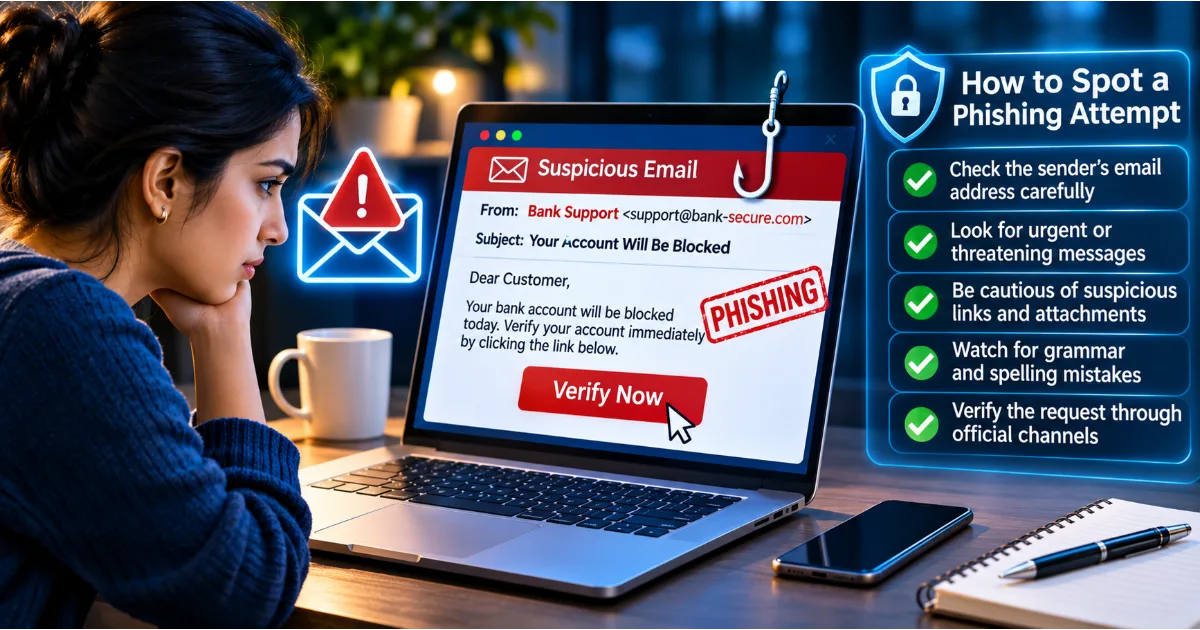
Phishing is one of the most common methods used to collect personal information. Criminals send emails, text messages, or social media messages that appear to come from trusted organisations, such as banks, delivery companies, government departments, employers, or online platforms.
The message usually creates urgency. It may claim that an account will be suspended, a payment has failed, a parcel cannot be delivered, or suspicious activity has been detected. The recipient is encouraged to click a link and enter confidential information on a fraudulent website.
These websites may closely resemble legitimate services. Once the victim enters a password, card number, identification detail, or verification code, the information can be captured by the attacker.
Phishing messages are becoming more convincing because criminals can copy company branding, imitate writing styles, and personalise messages using information collected from public sources. The safest approach is to avoid using unexpected links for account verification. Open the official application or type the organisation's known website address independently.
2. Data Breaches
A data breach occurs when confidential information is accessed, disclosed, altered, or stolen without authorisation. Businesses, educational institutions, healthcare providers, online platforms, and government organisations may store large amounts of personal information.
If attackers compromise an organisation's systems, they may obtain customer names, email addresses, phone numbers, passwords, financial records, or other sensitive information. The stolen data may later be used for fraud, sold to other criminals, or combined with information from other breaches.
A data breach can affect people who have done nothing wrong. They may have used a legitimate service, created a strong password, and followed security recommendations, yet still have their information exposed because the organisation holding it was compromised.
This is why individuals should avoid reusing passwords and should monitor important accounts for unusual activity. If a service reports a breach, follow its official instructions, change any affected or reused passwords, and review account recovery and authentication settings.
3. Fake Websites and Online Forms
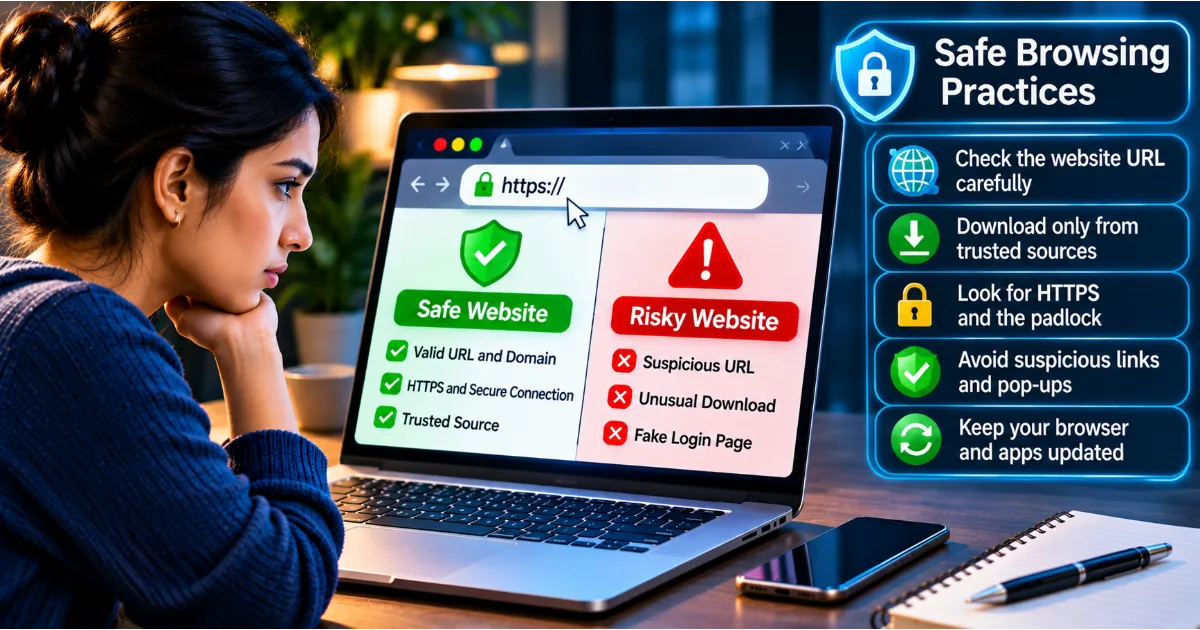
Fraudulent websites are designed to look like legitimate businesses, financial services, recruitment portals, shopping platforms, or government websites. Their purpose may be to collect login credentials, payment information, identity documents, or contact details.
A fake recruitment website, for example, might ask applicants to upload identification documents and provide banking information before an interview. A fraudulent shopping website might collect card details while pretending to process an order. A fake government portal could request personal information under the pretext of registration or verification.
A professional-looking design does not prove that a website is genuine. Before sharing sensitive information, check the domain carefully, verify the organisation through an independent source, and understand why the information is required.
Be particularly cautious when a website requests more information than is reasonably necessary for the service being provided.
4. Social Media Oversharing
Social media platforms encourage people to share photographs, achievements, travel experiences, birthdays, family updates, professional details, and everyday activities. Sharing these moments is not inherently unsafe, but excessive disclosure can provide criminals with information that supports impersonation and targeted fraud.
A public birthday post may reveal a date that is sometimes used in identity verification. A photograph of an identification card, boarding pass, office badge, or official document may expose information that should remain private. Public posts about family members, schools, workplaces, and travel plans can also help criminals construct convincing stories.
Some fraudsters use publicly available information to impersonate friends, relatives, colleagues, or business contacts. They may contact people with urgent requests for money or confidential information.
Review social media privacy settings, limit access to personal information, and think carefully before publishing documents, location details, or sensitive photographs.
5. SIM Swapping and Phone Number Takeover
A SIM swap attack occurs when a criminal fraudulently convinces a mobile operator to transfer a victim's phone number to a SIM card or connection controlled by the attacker. If successful, the criminal may receive calls and text messages intended for the legitimate owner.
This can be especially dangerous when a phone number is used for account recovery or one-time verification codes. An attacker who controls the number may attempt to reset passwords or access services linked to it.
Warning signs may include an unexpected loss of mobile network service, notifications about SIM changes that were not requested, or alerts about account recovery attempts.
Contact your mobile operator through an independently verified channel if your number suddenly stops working without explanation. Ask about account protections and additional verification procedures. Where available, use an authenticator application or passkey instead of relying entirely on SMS-based authentication.
6. Malware and Spyware
Malware is malicious software designed to damage systems, steal information, monitor activity, or gain unauthorised access. It can enter devices through infected attachments, unsafe downloads, malicious applications, compromised websites, or software vulnerabilities.
Some malware records keystrokes, captures screenshots, monitors browsing activity, or collects stored credentials. Spyware may operate quietly in the background, allowing criminals to observe activity without obvious signs of infection.
Downloading applications from unofficial sources increases the risk of installing malicious software. Fake software updates, pirated applications, suspicious browser extensions, and unexpected email attachments can also expose devices to threats.
Use trusted application stores, install software updates, maintain reputable security protection, and avoid granting unnecessary permissions to applications.
7. Public Wi-Fi and Unsafe Networks
Public Wi-Fi networks are convenient in airports, hotels, restaurants, libraries, and other shared locations. However, users should be cautious when connecting to networks they cannot independently verify.
A criminal may create a fraudulent hotspot with a name similar to that of a legitimate public network. Unsuspecting users may connect and expose their browsing activity or be redirected to fraudulent login pages.
Avoid accessing highly sensitive services through unknown networks. Confirm the correct network name with the venue, use secure websites and applications, keep device sharing settings disabled on public networks, and use a trusted VPN when appropriate.
Public Wi-Fi is not automatically unsafe, but users should not assume that every available network is genuine or trustworthy.
8. Vishing and Phone-Based Identity Theft
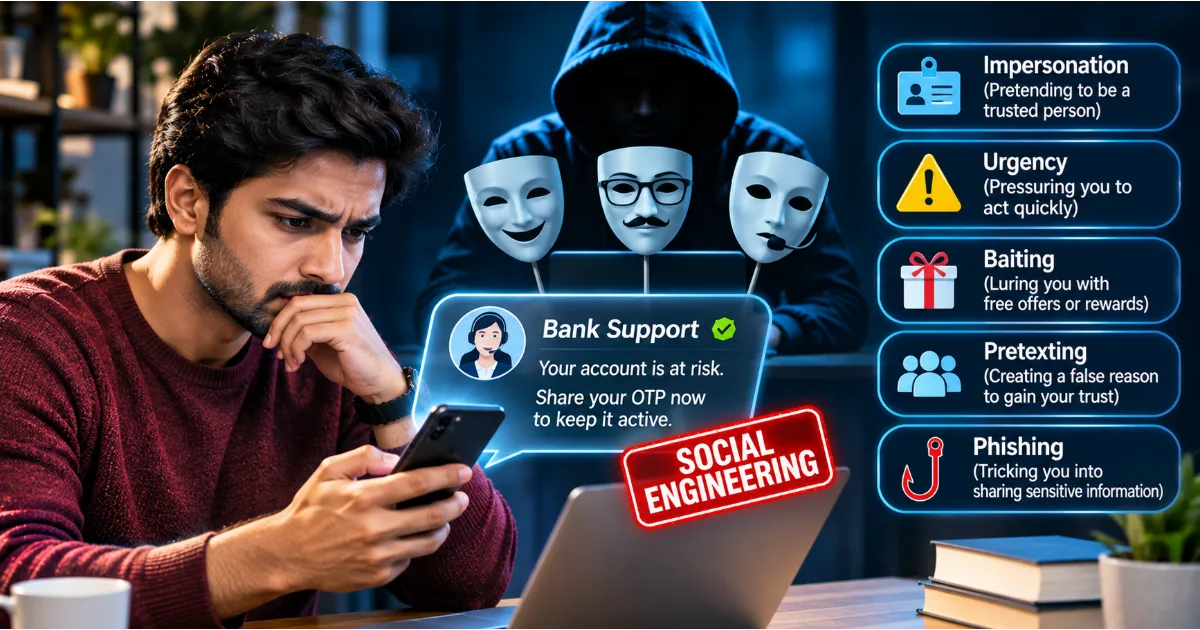
Vishing, or voice phishing, uses phone calls to manipulate people into revealing confidential information. Criminals may pretend to represent a bank, government agency, police department, technical support team, delivery company, or employer.
They may claim that a financial transaction is suspicious, an account has been blocked, a legal problem requires immediate action, or a verification process must be completed. The victim is pressured into sharing passwords, payment information, identity details, or one-time passwords.
Some callers use personal information gathered from previous data leaks or public profiles to make their claims appear legitimate.
Never share passwords, PINs, or one-time verification codes with an unexpected caller. End the call and contact the organisation using a verified phone number or official application.
Common Types of Identity Theft
Financial Identity Theft
Financial identity theft occurs when criminals use another person's information to access money, conduct transactions, or obtain financial services fraudulently. This may involve unauthorised card purchases, bank account access, fraudulent payment requests, or attempts to obtain loans using stolen details.
Victims may discover unfamiliar transactions, unexpected financial notifications, or applications they did not submit. Regularly reviewing bank statements and transaction alerts can help identify suspicious activity early.
Account Takeover
Account takeover occurs when an attacker gains control of an existing online account. Email, social media, shopping, cloud storage, and financial accounts can all become targets.
Once inside, criminals may change passwords, update recovery information, access private conversations, or impersonate the account owner. They may also use the compromised account to target contacts and spread additional scams.
Protecting accounts with unique passwords, multi-factor authentication, and secure recovery methods reduces the risk.
Government Identity Misuse
Government identity misuse involves the unauthorised use of official identification details or documents. Depending on the country and the services involved, criminals may attempt to use stolen information for fraudulent registrations, applications, benefits, or verification processes.
In India, people should take particular care when sharing Aadhaar, PAN, passport, and other official identity information. Share such details only when there is a legitimate requirement, and use appropriate masked or limited disclosure options where accepted.
Do not send identity documents to unknown individuals or upload them to unverified websites.
Medical Identity Theft
Medical identity theft occurs when someone uses another person's identity or healthcare information to obtain medical services, prescriptions, insurance benefits, or related services fraudulently.
It can create serious complications because incorrect records may affect billing, insurance claims, and medical histories. Review healthcare and insurance communications, protect medical documents, and report unfamiliar claims or records to the relevant provider.
Social Media Identity Theft
Criminals may create fake accounts using another person's name, photographs, and publicly available information. They may contact friends, request money, distribute fraudulent links, or publish misleading content.
A fake profile can damage trust and reputation even when no financial loss occurs. If someone creates an account impersonating you, report it through the platform's official impersonation process and inform affected contacts through a trusted channel.
Warning Signs That Your Identity May Have Been Stolen
Identity theft is not always immediately obvious. However, several unusual events may indicate that someone is using your information without permission.
Unexpected password-reset notifications can suggest that someone is attempting to access your accounts. Login alerts from unfamiliar locations or devices may indicate unauthorised activity. Emails about profile changes, new recovery details, or transactions that you did not initiate should be investigated promptly.
You might also receive financial statements or service notifications for accounts you never opened. Friends may tell you that they received unusual messages from your social media profile. Your mobile number may suddenly lose service, or you may discover unfamiliar applications, subscriptions, or purchases associated with your identity.
One warning sign alone does not always prove identity theft. A legitimate service may generate an incorrect notification, and network problems can occur for ordinary reasons. Nevertheless, unexpected security alerts should never be ignored. Verify them independently through the relevant organisation.
How to Protect Yourself from Online Identity Theft
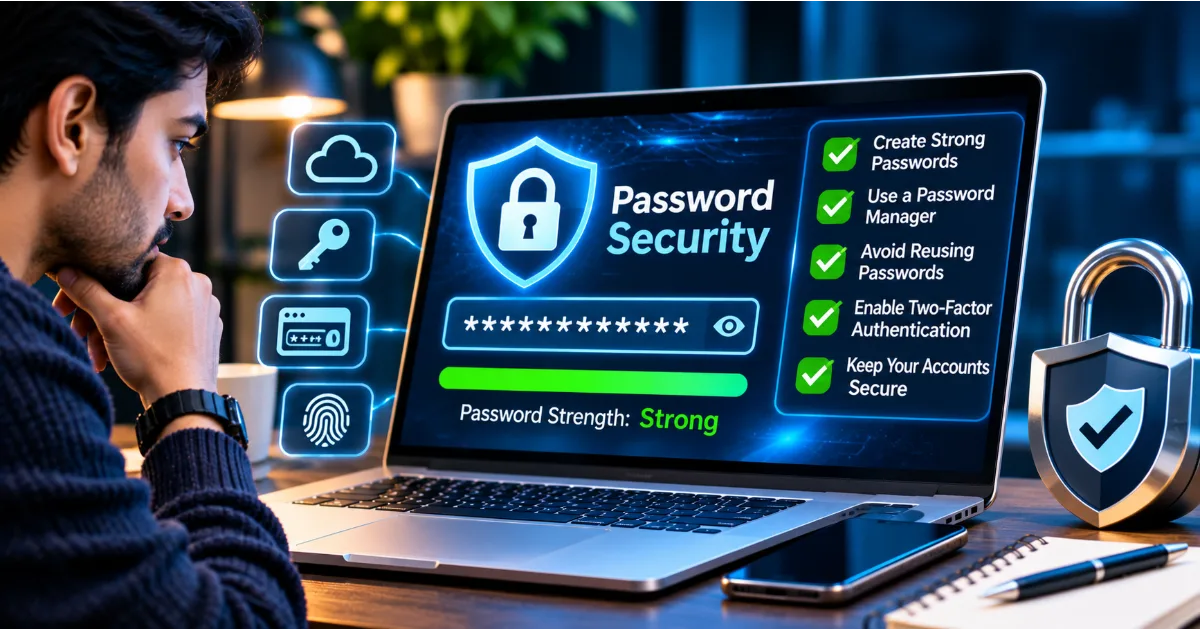
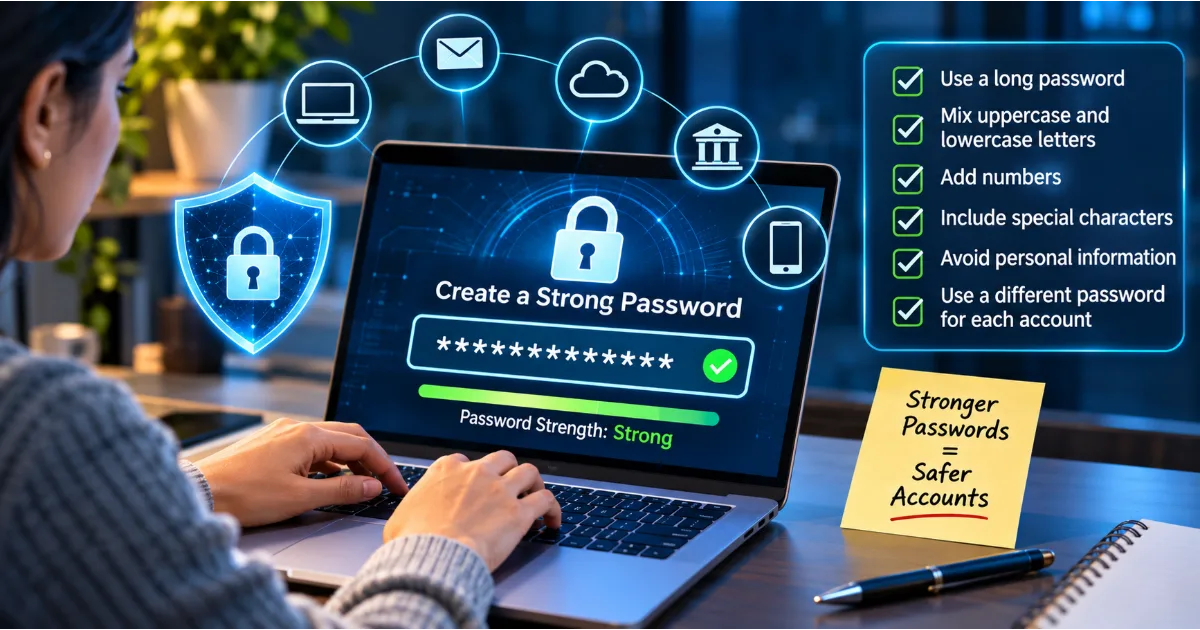
1. Use Strong and Unique Passwords
A strong password makes unauthorised access more difficult. Avoid simple combinations such as birthdays, names, common words, or predictable number sequences.
More importantly, do not reuse the same password across multiple services. If one website experiences a data breach, criminals may try the exposed password on other platforms.
A reputable password manager can help generate and store unique passwords securely. Where supported, passkeys provide another convenient authentication option that can reduce dependence on traditional passwords.
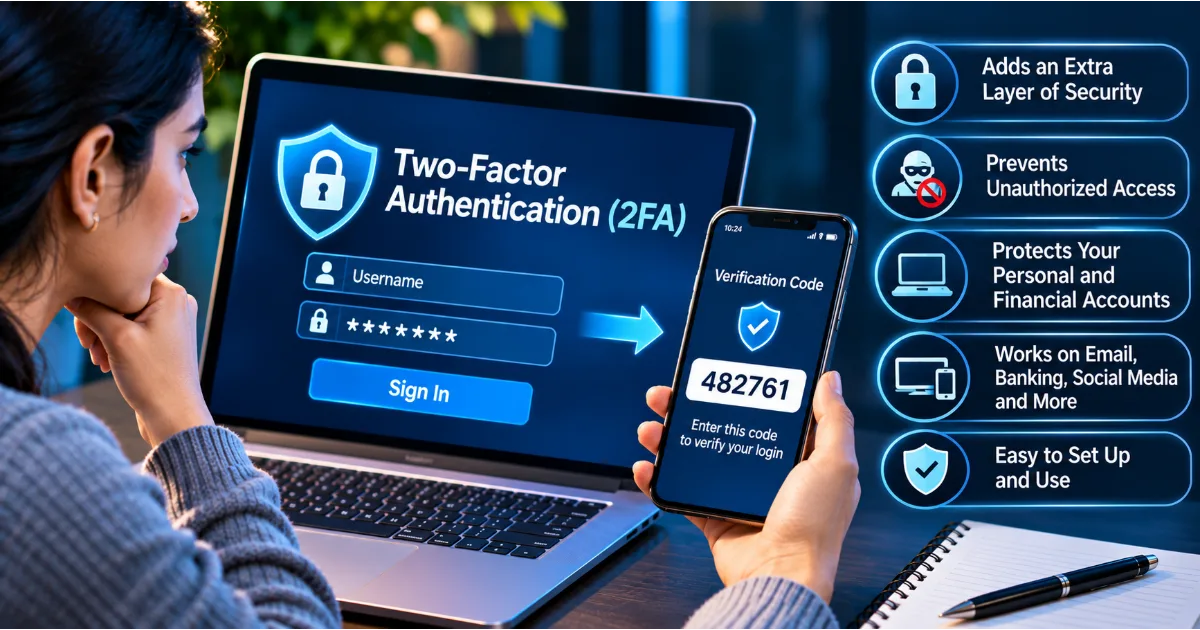
2. Enable Multi-Factor Authentication
Multi-factor authentication adds an additional verification step beyond a password. Depending on the service, this may involve an authenticator application, security key, passkey, or another approved method.
Even if a criminal obtains your password, an additional authentication requirement can make account access more difficult.
Prefer phishing-resistant options, such as passkeys or hardware security keys, when available. If you use verification codes, never share them with callers or people who contact you unexpectedly.
3. Protect Your Email Account
Your primary email account deserves particular attention because it may be connected to password recovery for many other services.
Use a unique password, enable multi-factor authentication, review recovery phone numbers and email addresses, and check for unfamiliar forwarding rules or connected applications.
If someone gains control of your email account, they may be able to reset passwords elsewhere. Protecting it can therefore reduce the risk of multiple account takeovers.
4. Limit Personal Information Shared Online
Before publishing personal information, consider whether strangers genuinely need access to it.
Avoid sharing identity documents, financial information, private contact details, travel documents, verification codes, or sensitive family information publicly. Review who can view your posts and personal profile details.
Be careful with online quizzes, giveaways, and surveys that request personal details unrelated to their stated purpose. Information that appears harmless in isolation can become useful when combined with other exposed data.
5. Verify Websites and Messages
Do not trust a message simply because it contains a familiar logo, a professional design, or your name.
Check the sender's actual address, inspect the website domain, and independently confirm unusual requests. If a message claims that your bank account requires immediate action, open the official banking application rather than following the message's link.
Never allow urgency to replace verification. Legitimate organisations should provide ways to confirm important requests through established channels.
6. Keep Devices and Applications Updated
Security updates often address weaknesses that criminals may exploit. Install operating system updates, browser updates, application updates, and security patches promptly.
Remove applications you no longer use, review application permissions, and avoid installing software from untrusted sources. Lock your devices with a strong screen-lock method and enable remote tracking or device-wiping features where appropriate.
7. Monitor Financial and Online Accounts
Review bank statements, card transactions, payment applications, and important account activity regularly. Enable transaction alerts where available.
Check your email for unexpected login notifications and review connected devices or active sessions on important platforms. If a service allows you to view recent account activity, investigate unfamiliar entries.
Early detection can reduce the time criminals have to misuse compromised information.
8. Be Careful When Sharing Identity Documents
Government identification documents and financial records should not be shared casually. Before uploading a document, confirm that the organisation is genuine and that the request is necessary.
Use official portals and approved verification processes. Where permitted, consider masked documents or limited disclosure methods. Keep digital copies in secure storage rather than leaving them in publicly accessible folders or shared devices.
9. Secure Your Mobile Number
Your mobile number may be linked to banking, email, social media, and other important services. Protect your mobile operator account with available security controls and avoid sharing sensitive account details with unknown callers.
Contact your operator if you receive an unexpected SIM-change notification or lose network access without a clear reason. Consider using authentication methods that do not depend entirely on text messages.
10. Review Privacy and Recovery Settings
Account security is not limited to passwords. Recovery email addresses, phone numbers, trusted devices, backup codes, and connected third-party applications can all affect account safety.
Review these settings periodically. Remove devices and applications you no longer recognise or use. Make sure recovery information belongs to you and remains accessible.
Online Identity Theft Prevention for Businesses
Businesses also have a responsibility to protect customer, employee, and organisational information. A single compromised employee account can expose internal documents, customer records, financial information, and business communication.
Organisations should apply access controls based on job responsibilities. Employees should only receive access to the information necessary for their work. Sensitive data should be protected through encryption, secure storage, controlled sharing, and appropriate retention policies.
Employee awareness training is equally important. Staff should learn to recognise phishing attempts, fraudulent invoices, impersonation calls, suspicious attachments, and unusual requests for confidential information.
Businesses should also establish clear incident-response procedures. Employees need to know whom to contact if they suspect an account has been compromised or customer information has been exposed.
Regular security assessments, software updates, secure backups, multi-factor authentication, and vendor risk reviews can strengthen an organisation's defences. Customer information should be collected only when necessary and retained only for legitimate purposes.
A business should not assume that a security policy is effective simply because it exists on paper. Employees need practical guidance, management support, and periodic reviews to ensure that security procedures work in everyday situations.
What to Do If You Become a Victim of Identity Theft
Discovering that someone has misused your identity can be stressful. Acting quickly and systematically can help limit further damage.
Step 1: Secure Your Most Important Accounts
Start with your primary email account and financial accounts. Change compromised passwords from a trusted device, enable multi-factor authentication, and review recovery details.
Sign out of unfamiliar active sessions and remove suspicious connected applications. If you cannot access an account, use the organisation's official account-recovery process.
Step 2: Contact Your Bank or Financial Provider
If you notice unauthorised transactions or suspect that payment information has been stolen, contact your bank or financial institution immediately through its official customer-service channel.
Ask about blocking affected cards, securing accounts, disputing unauthorised transactions, and preventing further misuse. Keep records of transaction details and all communication.
Step 3: Report the Incident
Report the incident to the appropriate platform, service provider, financial institution, or relevant authorities. Provide accurate information and preserve evidence such as suspicious messages, transaction records, email alerts, and screenshots.
In India, cybercrime-related complaints can be reported through the official National Cyber Crime Reporting Portal. If financial cyber fraud is underway, promptly contact the national cybercrime helpline at 1930 and follow the official reporting process. A prompt report may improve the opportunity for authorities and financial institutions to respond.
Step 4: Inform People Who May Be Affected
If your email or social media account has been compromised, inform contacts through another trusted communication channel. Explain that suspicious messages may have been sent from your account and ask them not to respond to unusual requests or click unexpected links.
This can prevent criminals from using your identity to target friends, relatives, colleagues, or customers.
Step 5: Preserve Evidence
Do not immediately delete every suspicious message or notification. Save relevant emails, screenshots, transaction references, phone numbers, website addresses, and account alerts.
Evidence can help service providers and authorities investigate what happened. Keep a record of the dates, times, organisations contacted, and complaint reference numbers.
Step 6: Review Other Accounts
If a password has been reused, change it on every affected service. Review other accounts connected to the compromised email address or phone number.
Check financial statements, account recovery settings, shopping accounts, cloud storage, and social media profiles. Identity theft can extend beyond the first account that was compromised.
Identity Theft in the Age of Artificial Intelligence
Artificial intelligence is changing the way cybercriminals conduct impersonation and fraud. AI tools can help criminals generate convincing messages, imitate communication styles, create realistic fake images, and produce synthetic audio or video.
A criminal might use publicly available information to create a message that appears to come from a colleague or family member. In a more advanced scenario, manipulated audio could be used to imitate someone's voice during a fraudulent call.
These techniques make it increasingly important to verify unusual requests, especially those involving money, account access, confidential documents, or urgent action.
A familiar voice or realistic video should not automatically be treated as proof of identity. When a request seems unusual, contact the person through a separate, trusted communication channel. Establish verification procedures for important financial and business decisions rather than relying solely on messages or calls.
AI can also help defenders identify suspicious activity, detect unusual patterns, and improve security monitoring. However, technology cannot replace careful verification and responsible information handling.
Common Myths About Online Identity Theft
One common myth is that identity theft only affects wealthy individuals. In reality, anyone with personal information, online accounts, or financial services can become a target. Criminals may seek small amounts from many victims, use stolen accounts for impersonation, or collect information for later misuse.
Another misconception is that a person is safe if they never shop online. Identity theft can occur through email, social media, phone calls, data breaches, public records, compromised organisations, and physical documents.
Some people believe that strong passwords alone provide complete protection. Strong passwords are important, but phishing, malware, social engineering, and data breaches can still expose accounts. Security requires multiple layers.
A further myth is that identity theft will always be noticed immediately. Criminals may misuse information quietly, and victims may discover the problem only after receiving an unexpected bill, account notification, or complaint.
Finally, many people assume that a professional-looking website or a caller who knows personal details must be genuine. Criminals can copy branding and obtain personal information from many sources. Independent verification remains essential.
Building Long-Term Digital Identity Protection Habits
Protecting your identity is not a one-time activity. It is an ongoing habit that should become part of everyday digital behaviour.
Use unique passwords and secure authentication methods. Keep devices updated. Review privacy settings and account recovery options. Monitor important financial and online accounts. Avoid sharing confidential information in response to unexpected requests.
Families should discuss online safety with children and older relatives, who may encounter different forms of impersonation and fraud. Employees should receive practical training that reflects the scams and communication methods relevant to their work.
Organisations should treat personal information as a responsibility rather than simply a resource to collect. Limiting unnecessary data collection, securing stored information, controlling access, and responding transparently to incidents can reduce risks for customers and employees.
The goal is not to stop using digital services. The goal is to use them with awareness, sensible safeguards, and the ability to recognise suspicious behaviour.
Conclusion
Online identity theft is a serious digital security threat because personal information can be misused in many ways. Criminals may steal passwords through phishing, collect records from data breaches, create fraudulent websites, impersonate individuals on social media, or exploit compromised devices and mobile accounts.
The consequences can extend beyond financial loss. Victims may experience privacy violations, reputational damage, account lockouts, fraudulent applications, and prolonged efforts to restore control of their identities.
The strongest protection comes from combining good habits with appropriate technology. Use unique passwords, enable multi-factor authentication, secure your email and mobile accounts, limit personal information shared online, verify unexpected requests, and monitor important accounts regularly.
If identity theft occurs, respond quickly. Secure compromised accounts, contact financial providers, preserve evidence, report the incident through official channels, and review other services that may be affected.
Your digital identity deserves the same care as your physical identity. Every password protected, suspicious request verified, and unnecessary disclosure avoided makes it harder for criminals to misuse your personal information.
#CybersecurityAwareness #IdentityTheft #OnlineSafety #DigitalSecurity #ScamPrevention