When Cybercriminals Attack Human Behaviour Instead of Technology
When people think about cybersecurity, they often imagine hackers writing complicated code, breaking into computer systems, exploiting software vulnerabilities, or using sophisticated tools to steal information. Although these technical attacks are real threats, not every cyberattack requires advanced programming skills. Sometimes, the easiest way to compromise a secure system is to convince an authorized person to provide access voluntarily.
This is the foundation of social engineering.
Social engineering is a form of manipulation in which cybercriminals exploit human emotions, trust, habits, and decision-making to obtain confidential information, financial benefits, or unauthorized access to systems. Instead of directly defeating a security mechanism, attackers manipulate people into bypassing it themselves.
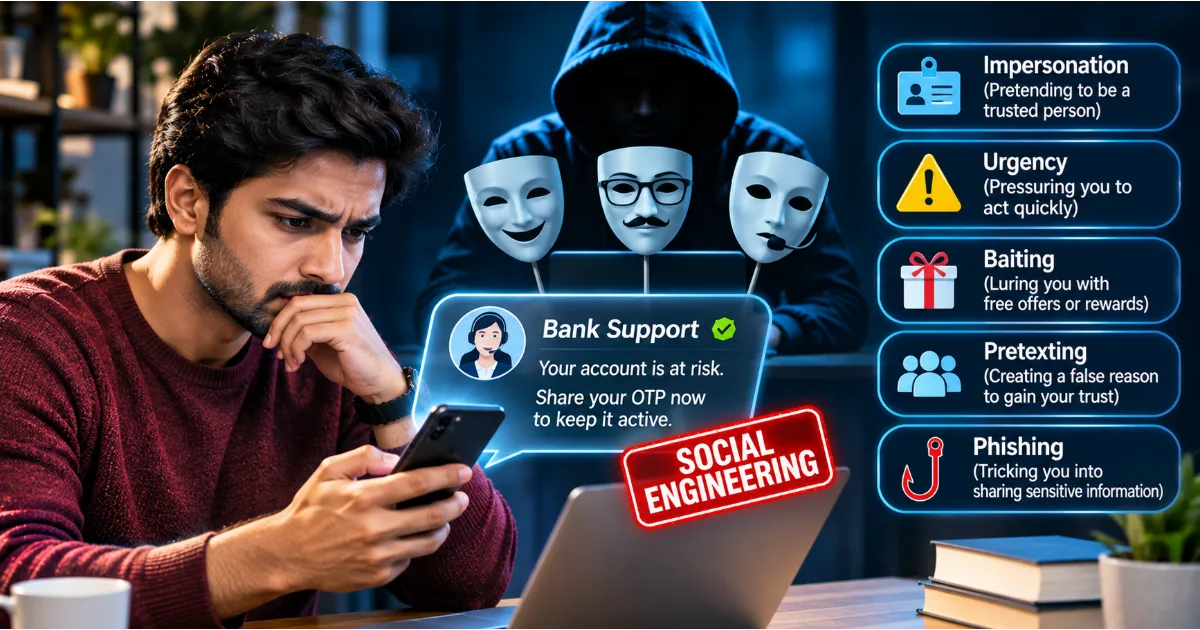
Imagine receiving a phone call from someone claiming to be a bank representative. The caller knows your name, speaks professionally, and explains that suspicious activity has been detected on your account. They create urgency by suggesting that your money could be at risk unless you complete a verification process immediately. They then ask you to share an OTP or approve a transaction. Because the caller sounds convincing and appears to understand your situation, you may follow the instructions without realizing that the person is attempting to steal your money.
Continue Reading
Another example involves an employee receiving an email that appears to come from the company's senior management. The message requests an urgent payment to a new supplier account and emphasizes that the transaction must be completed before the end of the business day. The employee may process the payment because they believe the request is genuine and do not want to delay an important business operation.
In both situations, the attacker does not necessarily need to break through a technical security system. The attack succeeds by influencing human decisions.
Social engineering has become an important cybersecurity concern because individuals and organizations rely heavily on digital communication. Email, telephone calls, messaging applications, social media, video meetings, and online payment systems create numerous opportunities for criminals to impersonate trusted people and manipulate their targets.
Understanding social engineering is therefore essential for online safety. This article explores how social engineering works, the psychological techniques attackers use, common attack methods, realistic examples, warning signs, prevention strategies, and the steps individuals and businesses should take when an incident occurs.
What Is Social Engineering in Cybersecurity?
Social engineering is the practice of manipulating people into performing actions or disclosing information that compromises their security. In cybersecurity, it is commonly used to gain unauthorized access to accounts, devices, networks, financial resources, and confidential information.
Unlike a conventional technical attack, which may exploit weaknesses in software or infrastructure, social engineering exploits weaknesses in human decision-making.
An attacker may pretend to be a trusted employee, customer support representative, bank official, delivery agent, government representative, supplier, or family member. The objective is to establish enough trust or pressure to influence the target's behaviour.
Social engineering attacks can happen online, over the telephone, through physical interactions, or through a combination of communication methods.
For example, a criminal may first collect information about a company through its public website. They may identify employees, management positions, suppliers, and business relationships. The attacker then contacts an employee while pretending to be someone from the IT department and requests assistance with an urgent account problem.
The employee may provide information that helps the attacker compromise an account or bypass an organizational procedure.
Social engineering can affect anyone. Students, working professionals, business owners, senior executives, retired individuals, and ordinary internet users can all become targets.
The important point is that being educated or technically experienced does not automatically make someone immune. Attackers frequently exploit situations in which people are distracted, stressed, busy, emotionally affected, or under pressure.
Why Do Social Engineering Attacks Work?
Social engineering works because people make decisions using a combination of logic, experience, emotion, trust, and social expectations.
Attackers understand these behavioural patterns and construct situations that encourage people to respond quickly rather than evaluate the risks.
Exploiting Trust
People naturally tend to trust familiar institutions, professional communication, and individuals who appear to have legitimate authority.
An attacker may imitate a bank employee, manager, colleague, government representative, or technology support professional.
The target may assume that the communication is genuine because the person uses familiar terminology, knows some personal details, or appears to understand the organization's internal processes.
This is why verification should never depend only on how professional or convincing someone sounds.
Creating Fear and Urgency
Fear is one of the most frequently exploited emotions in social engineering.
A message may claim that your bank account is compromised, your identity has been misused, your payment is overdue, or your account will be permanently suspended.
The attacker wants you to believe that delaying action will create serious consequences.
Under pressure, people may stop checking information and follow instructions automatically.
Whenever a message creates an unusual sense of urgency, pause and verify the situation independently.
Using Curiosity
Attackers may use curiosity to encourage people to open attachments, visit websites, or download files.
A message might claim that someone has shared a confidential photograph, an important document, a salary list, or a private video.
The recipient may open the file simply because they want to know what it contains.
Unexpected attachments and links should be treated carefully, even when the message appears interesting or personally relevant.
Offering Rewards
People are attracted to opportunities that appear beneficial.
Fraudulent messages may promise free gifts, exclusive discounts, cash rewards, employment opportunities, investment returns, or special benefits.
The offer may appear to be available only for a limited period.
The attacker uses the possibility of gaining something valuable to reduce the recipient's caution.
If an offer seems unusually generous or requires sensitive information before it can be claimed, verify it through the official organization.
Exploiting Authority
People often follow instructions from individuals they believe have authority.
An attacker may pretend to be a senior manager, police officer, government official, lawyer, or company administrator.
They may demand confidential information or insist that a payment must be completed immediately.
The target may comply because they fear professional consequences or legal problems.
Legitimate authority does not eliminate the need for security verification. Sensitive requests should follow established procedures.
Exploiting Social Pressure
Attackers may create the impression that everyone else is already following a particular instruction.
For example, a fraudulent message may suggest that other employees have completed a new account verification process and that the recipient is the only person who has not responded.
People may follow the instruction to avoid appearing uncooperative.
Organizations should encourage employees to question unusual requests without fear of embarrassment or punishment.
Common Types of Social Engineering Attacks
Social engineering includes several techniques that target people through different communication channels and situations.
1. Pretexting
Pretexting occurs when an attacker creates a fabricated identity or situation to obtain information or persuade someone to perform an action.
For example, someone may call an employee claiming to be from the company's IT department. They may explain that an account migration is taking place and request the employee's login credentials to complete the process.
The story is designed to sound reasonable and provide an explanation for why the attacker needs access.
Pretexting can involve fake customer support requests, fraudulent recruitment communication, impersonation of government officials, and false business relationships.
The best protection is independent identity verification and strict rules against sharing confidential credentials.
2. Baiting
Baiting uses an attractive offer or object to encourage someone to take an unsafe action.
A digital baiting attack may involve a message promising free software, a valuable document, a gift voucher, or access to exclusive content.
A physical baiting attempt may involve leaving an unidentified USB device in a workplace or public location, hoping that someone will connect it to a computer.
The attacker relies on curiosity, convenience, or the desire to obtain something valuable.
Never connect unknown storage devices to personal or organizational computers. Download applications only from trusted sources and verify promotional offers before providing information.
3. Quid Pro Quo Attacks
Quid pro quo attacks involve offering something in exchange for information, assistance, or access.
For example, a fraudulent technical support representative may offer to fix a computer problem in exchange for remote access to the device.
The target believes they are receiving a useful service, while the attacker gains an opportunity to access sensitive information.
A legitimate support process should have clear identity verification, approved tools, and defined authorization procedures.
Do not provide remote access to unknown individuals who contact you unexpectedly.
4. Tailgating and Piggybacking
Tailgating is a physical social engineering technique in which an unauthorized individual follows an authorized person into a restricted area without completing the required access verification.
For example, someone may wait near an office entrance and ask an employee to hold the door because they claim to have forgotten their access card.
The employee may allow the person inside out of politeness.
Piggybacking is a related situation in which an authorized person knowingly or unknowingly allows another individual to enter using their access privileges.
Organizations should use access cards, visitor verification, reception procedures, and employee awareness to prevent unauthorized physical entry.
5. Shoulder Surfing
Shoulder surfing involves observing someone entering confidential information, such as a password, PIN, or verification code.
An attacker may watch over a person's shoulder in a public place, workplace, transport facility, or queue.
The technique can also involve observing sensitive information displayed on a screen.
Protect your screen when entering confidential details, avoid displaying passwords publicly, and use privacy screens where appropriate.
6. Dumpster Diving
Dumpster diving involves searching discarded materials for information that can support an attack.
Documents containing employee details, customer information, internal telephone numbers, invoices, financial records, or account information may provide useful clues.
Organizations should dispose of sensitive paper records through secure shredding and follow appropriate procedures for disposing of electronic storage devices.
Individuals should also avoid throwing away documents containing confidential personal or financial information without destroying them appropriately.
7. Honey Trapping
Honey trapping involves creating a deceptive personal or romantic relationship to manipulate someone into revealing information, providing money, or granting access.
An attacker may create a fake online identity and build an emotional connection with the target.
Over time, the person may request financial assistance, confidential photographs, sensitive business information, or access to accounts.
This technique can appear on dating applications, social networks, messaging platforms, and professional networking websites.
Be careful when online contacts quickly develop intense emotional relationships or repeatedly request money and confidential information.
8. Scareware
Scareware uses frightening warnings to persuade users to download software, purchase unnecessary services, or provide access to their devices.
A fraudulent webpage may display a warning claiming that the computer is infected with dangerous malware.
It may instruct the user to call a support number or download an application immediately.
The warning may be entirely fabricated.
Do not call unexpected support numbers displayed in browser pop-ups. Close suspicious pages and use trusted security software to assess the device.
9. Business Email Compromise
Business Email Compromise is a form of fraud in which criminals impersonate or compromise business communication accounts to manipulate employees into transferring money or sharing confidential information.
An attacker may pretend to be a company director, supplier, customer, or business partner.
They may send urgent payment instructions, request changes to bank details, or ask for confidential documents.
Organizations should use independent verification and dual approval for sensitive financial activities.
10. Deepfake-Based Social Engineering
Advances in artificial intelligence have introduced additional opportunities for impersonation.
Attackers may use manipulated audio, video, or images to imitate someone familiar.
For example, an employee may receive a voice message that appears to come from a senior executive requesting an urgent financial transaction.
A video meeting may also be used to create a false impression of identity.
Audio and video should not be treated as sufficient proof of identity for high-risk requests. Organizations should establish verification methods based on independent channels, approved approval processes, and trusted identity controls.
The Role of Artificial Intelligence in Modern Social Engineering
Artificial intelligence has changed how social engineering campaigns can be prepared and delivered.
In the past, fraudulent messages often contained obvious grammar mistakes, unusual wording, and generic language. These signs sometimes helped recipients recognize suspicious communication.
Modern AI tools can generate fluent messages, translate content into different languages, summarize publicly available information, and help criminals personalize communication.
An attacker may use publicly available professional information to create a convincing message related to a person's job, company, or business relationships.
AI-generated voice cloning can also create additional impersonation risks. A short recording of someone's voice may be misused to produce audio that sounds similar to the original speaker.
This creates challenges for businesses that depend heavily on telephone approvals or informal verbal instructions.
The appropriate response is not to distrust every digital interaction. Instead, organizations and individuals should avoid relying on appearance, voice, writing style, or familiarity alone when verifying sensitive requests.
Use established identity verification procedures, particularly for payments, password resets, confidential information, and administrative access.
Realistic Social Engineering Scenarios Everyone Should Understand
Understanding realistic situations makes it easier to recognize social engineering before it causes harm.
Scenario 1: The Fake Bank Representative
A person receives a call from someone claiming to represent their bank. The caller explains that suspicious activity has been detected and that the account needs immediate verification.
The caller knows the person's name and may mention partial account information obtained through another source.
They then ask for an OTP to cancel a supposedly unauthorized transaction.
The person shares the code, believing that they are protecting their account.
In reality, the attacker may be attempting to authorize a transaction or access the account.
The lesson: Never share OTPs or confidential authentication information with unsolicited callers. Contact the bank independently using its official number or application.
Scenario 2: The Fake IT Support Employee
An employee receives a telephone call from someone claiming to work in the company's IT department.
The caller explains that a technical problem has been detected and requests remote access to the employee's computer.
The employee agrees because they believe the caller is helping resolve a genuine issue.
The attacker may then attempt to access confidential files, install unauthorized software, or obtain login credentials.
The lesson: Verify technical support requests through official internal channels and use only company-approved remote assistance procedures.
Scenario 3: The Urgent CEO Payment Request
A finance employee receives an email that appears to come from the company founder or chief executive.
The message claims that an important business transaction must be completed immediately and asks the employee to transfer funds to a new bank account.
The employee recognizes the sender's name and follows the instructions without checking the request independently.
The payment reaches an account controlled by criminals.
The lesson: Verify unusual payment requests using an independently established contact method. Financial transactions should follow documented approval procedures regardless of the sender's apparent seniority.
Scenario 4: The Fake Job Recruitment Offer
A job seeker receives a message claiming that they have been shortlisted for an attractive employment opportunity.
The recruiter requests identity documents, personal information, and a registration fee before scheduling an interview.
The communication appears professional and includes a company logo.
After receiving the payment and documents, the supposed recruiter disappears.
The lesson: Verify recruitment opportunities through official company channels. Be suspicious of requests for payment in exchange for guaranteed employment or interviews.
Scenario 5: The Social Media Impersonation Scam
A user receives a message from a profile that appears to belong to a friend.
The person claims to be facing an emergency and urgently needs financial assistance.
Because the account looks familiar, the user considers transferring money.
However, the friend's account may have been compromised or impersonated.
The lesson: Confirm unusual financial requests through a separate communication channel, such as a direct telephone call to the person you already know.
Warning Signs That Someone May Be Using Social Engineering
Social engineering attacks can appear in different forms, but several warning signs occur frequently.
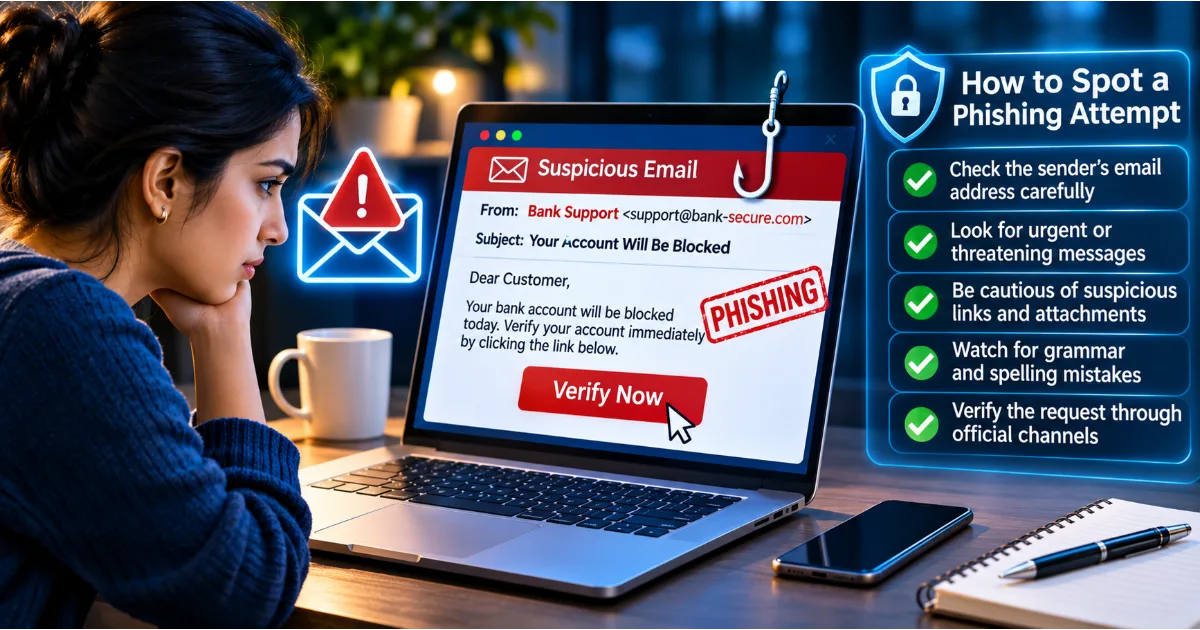
An unexpected message requesting confidential information should always be treated carefully. This includes passwords, OTPs, recovery codes, financial details, and identity documents.
An unusual sense of urgency is another warning sign. Attackers may demand immediate action and discourage verification.
Requests to bypass established procedures are particularly concerning. Someone may claim that normal approvals are unnecessary because the situation is urgent.
Be careful when a person insists that a conversation must remain secret or asks you not to contact your manager, bank, family member, or technical support team.
Unexpected requests to install software, share screens, enable remote access, or approve login notifications also deserve attention.
Finally, be cautious when someone offers unusually attractive rewards or claims that you must pay a fee to receive a guaranteed benefit.
No single warning sign proves that an interaction is fraudulent. However, several warning signs together should encourage independent verification before taking action.
How to Protect Yourself From Social Engineering Attacks
Preventing social engineering requires awareness, verification, and consistent security habits.
Verify Identity Independently
Never rely entirely on the name, photograph, phone number, email address, or voice presented by someone contacting you.
If a person claims to represent a bank, employer, government department, or service provider, verify their identity through an official communication channel.
For sensitive requests, initiate contact yourself using information obtained independently rather than using the contact details supplied in the unexpected message.
Never Share Passwords or OTPs
Passwords, OTPs, authentication codes, and recovery codes are confidential.
Do not disclose them to callers, messaging contacts, or people claiming to provide technical support.
Legitimate account protection should not require you to reveal your password to another person.
Avoid Making Decisions Under Pressure
When someone demands immediate action, pause.
Take time to understand what is being requested, why it is necessary, and whether the request follows normal procedures.
A genuine emergency should still allow appropriate identity and authorization checks.
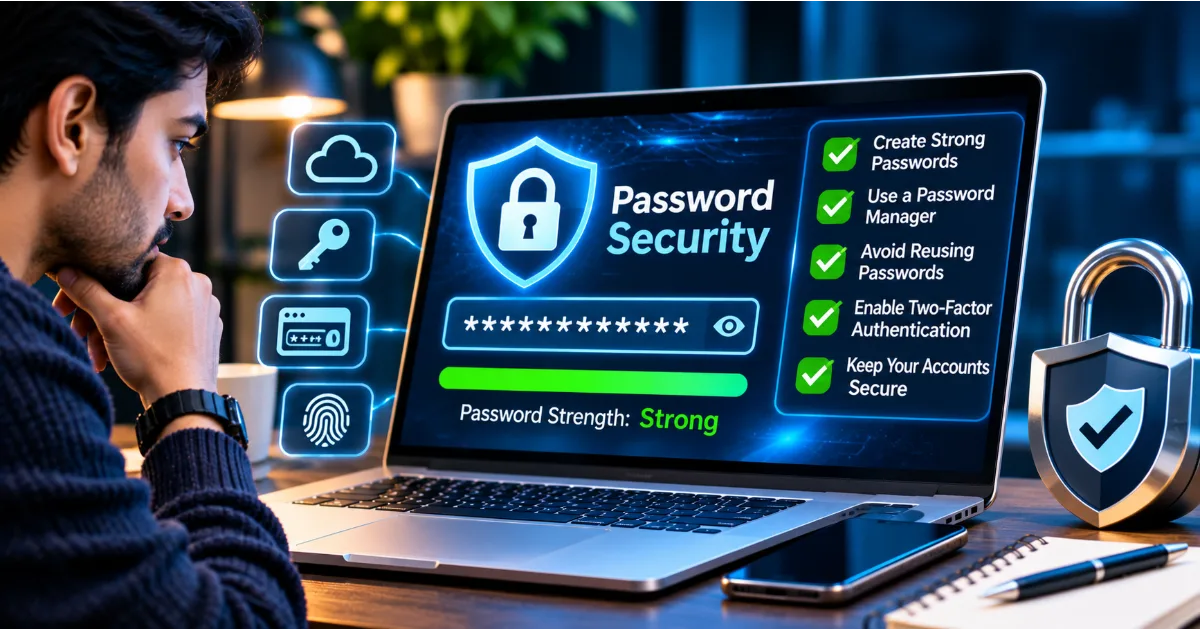
Use Strong Authentication
Use unique passwords and enable multi-factor authentication on important accounts.
Where available, consider passkeys or hardware security keys for stronger protection against phishing.
Never approve unexpected authentication notifications.
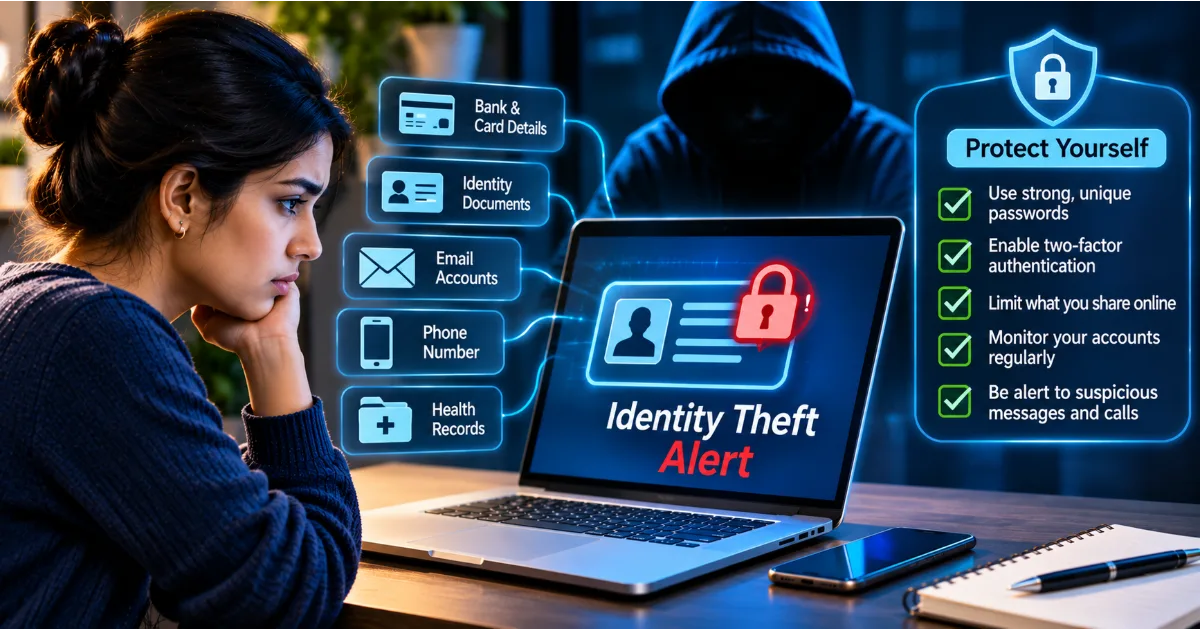
Limit Personal Information Shared Online
Public information can help attackers create convincing impersonation attempts.
Avoid publishing unnecessary details about your home, family, workplace, travel plans, financial activities, and account recovery information.
Review the privacy settings of social media and professional networking accounts.
Keep Devices Secure
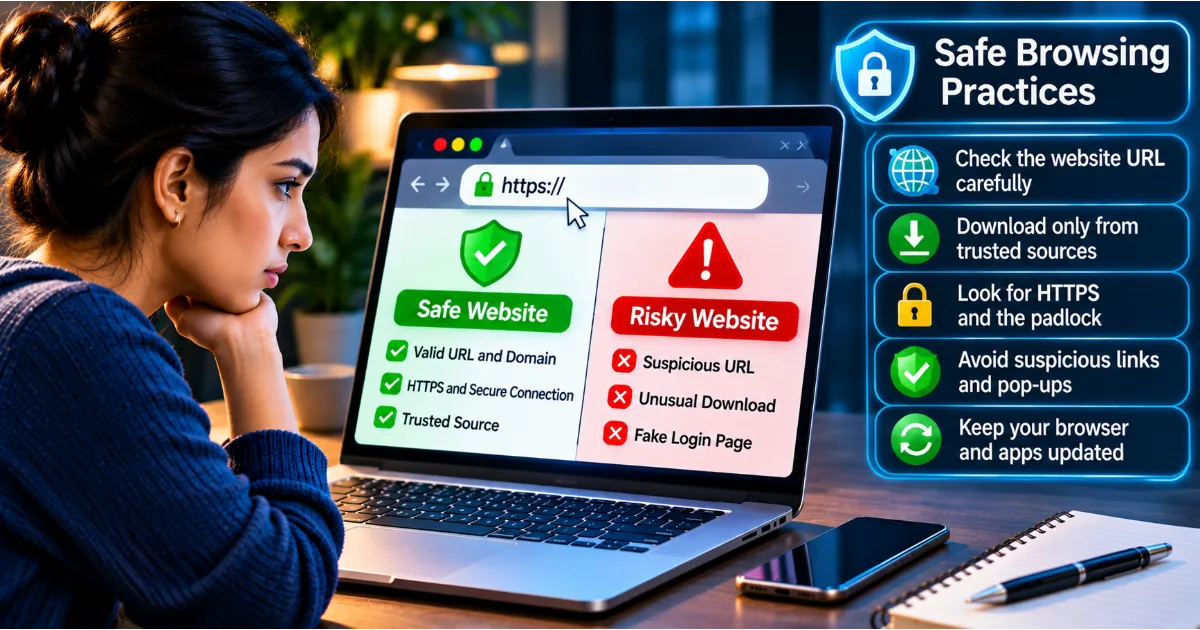
Install operating system and application updates, use reputable security software, enable device locks, and avoid downloading applications from unknown sources.
Do not connect unidentified USB devices to personal or business computers.
Establish a Verification Habit
Before sharing information, transferring money, approving access, or downloading an unexpected file, verify the request.
For important activities, use a second communication channel and follow a defined approval process.
Social Engineering Prevention for Businesses and Organizations
Organizations must recognize that employees are frequently targeted because they have access to business information, financial systems, and internal applications.
A strong cybersecurity programme should address both technical vulnerabilities and human behaviour.
Develop an Employee Awareness Programme
Employees should receive regular cybersecurity training that explains social engineering, phishing, impersonation, suspicious phone calls, fraudulent payment requests, and unsafe access approvals.
Training should use realistic examples that reflect the organization's operations.
Employees should understand that reporting suspicious activity is a responsible action rather than an admission of failure.
Establish Strong Identity Verification Procedures
Organizations should define how employees verify internal requests, external suppliers, customers, contractors, and support representatives.
High-risk actions should never depend solely on an email display name or telephone caller ID.
Use approved identity verification processes for password resets, access requests, and sensitive account changes.
Introduce Financial Approval Controls
Financial transfers should require documented authorization.
Changes to supplier bank details should be verified through independently established contact information.
High-value transactions may require approval from more than one authorized individual.
These controls help prevent a single manipulated employee from causing significant financial damage.
Apply the Principle of Least Privilege
Employees should have access only to the information and systems required for their responsibilities.
Restrict administrative privileges and review permissions regularly.
If an account is compromised, limiting its permissions can reduce the potential damage.
Conduct Ethical Security Awareness Exercises
Organizations may conduct authorized simulations to evaluate how effectively employees recognize suspicious messages and report potential attacks.
These exercises should be designed to educate employees rather than embarrass or punish them.
The objective is to identify areas where additional training or technical controls are needed.
Create a Clear Incident Reporting Process
Employees should know how to report suspicious calls, emails, messages, account activity, and unexpected access requests.
The reporting process should be simple, accessible, and supported by management.
Security teams should investigate reports and communicate lessons that can help prevent similar incidents.
What Should You Do If You Become a Victim of Social Engineering?
If you believe you have been manipulated into sharing information, approving access, or transferring money, act quickly.
First, identify what information or access may have been exposed. Determine whether you shared a password, OTP, recovery code, financial information, identity document, or remote device access.
If credentials were exposed, change the affected passwords through the genuine service. Change any other accounts that reused the same password.
Review active sessions, revoke unfamiliar devices, remove suspicious connected applications, and enable stronger authentication where possible.
If you approved an unauthorized transaction or shared financial information, contact your bank or payment provider immediately through its official channels.
If a device may have been compromised, disconnect it from the network when appropriate, avoid using it for sensitive activities, and obtain professional security assistance.
If the incident occurred at work, report it immediately to the IT or security team. Preserve relevant messages, call details, transaction information, and other evidence.
Do not delete important evidence before the incident has been reviewed.
In India, suspected cybercrime can be reported through the National Cyber Crime Reporting Portal. Financial cyber fraud can also be reported through helpline 1930. Contact the affected financial institution without delay.
Remember that reporting an incident quickly may help limit its consequences.
Building a Security-Conscious Digital Culture
Cybersecurity should not be treated as a responsibility belonging only to technical departments.
Every person who uses a digital device, accesses an online account, handles business information, or communicates through the internet plays a role in maintaining security.
A security-conscious culture encourages people to question unusual requests, verify identities, report suspicious communication, and follow established procedures.
Individuals should develop the habit of pausing before sharing confidential information.
Families can discuss common scams and help older relatives or less experienced internet users recognize suspicious communication.
Schools and educational institutions can introduce digital safety awareness as part of technology education.
Businesses can make cybersecurity training a regular activity rather than an occasional exercise after an incident.
Most importantly, organizations should create an environment in which employees feel comfortable reporting mistakes and suspicious interactions.
People are more likely to report an incident when they know that the organization values early detection and learning.
Conclusion: Your Awareness Is an Important Part of Cybersecurity
Social engineering demonstrates that cybersecurity is not only about protecting computers, networks, and applications. It is also about protecting the people who use them.
Cybercriminals exploit trust, fear, urgency, curiosity, authority, and emotional relationships to persuade people to reveal information or perform unsafe actions. They may impersonate bank employees, company executives, technical support representatives, government officials, recruiters, suppliers, or even people you know personally.
These attacks can result in financial fraud, identity theft, compromised accounts, data exposure, and serious organizational disruption.
Protecting yourself begins with understanding how manipulation works. Verify identities independently, never share passwords or OTPs, avoid making decisions under pressure, use strong authentication, and follow established security procedures.
Businesses should support these habits through employee education, financial approval controls, identity verification, restricted access, and effective incident reporting.
Technology can detect many threats, but human awareness remains an important part of digital protection.
Remember that a convincing voice, familiar name, professional email, or official-looking logo does not automatically establish trustworthiness.
Before sharing information, approving access, or transferring money, stop and verify.
In cybersecurity, the strongest defence is not only knowing how to protect your technology. It is knowing when someone is trying to manipulate you.
#SocialEngineering #CybersecurityAwareness #OnlineSafety #ScamPrevention #DigitalSecurity